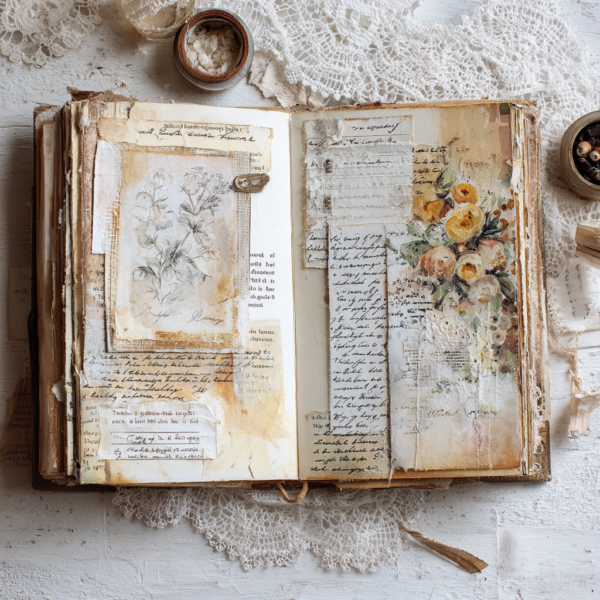
Introduction
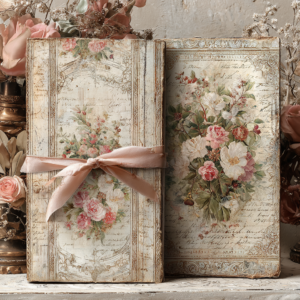 If you’ve ever stepped into the beautiful, creative world of junk journaling, you may have quickly realized there’s a whole language that comes with it. From ephemera and folios to signatures and tuck spots, understanding the terminology can make a huge difference in your confidence and creativity.
This ultimate junk journal glossary is your go-to guide for learning the most important junk journal terms, techniques, and processes. Whether you’re a beginner or an experienced creator, this resource will help you understand the craft on a deeper level—and maybe even inspire your next project.
What Is a Junk Journal?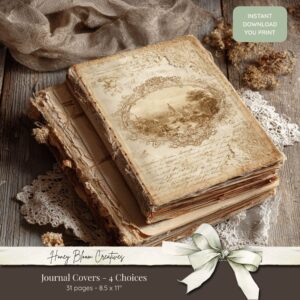
A junk journal is a handmade book created using recycled, vintage, and found materials such as old papers, book pages, fabric scraps, envelopes, and more. These journals are often used for writing, memory keeping, art journaling, or simply as creative expression.
Essential Junk Journal Terms (A–Z)
A–C: Foundations & Basics
Accordion Fold – A folding technique that creates a zig-zag structure for interactive pages.
Acetate – Clear plastic used for overlays or window effects.
Altered Book – A recycled book transformed into a journal.
Archival – Acid-free materials that preserve your journal over time.
ATC (Artist Trading Card) – Small collectible art cards used in journaling.
Aging – Techniques like tea or coffee staining to give paper a vintage look.
Belly Band – A strip attached to a page to hold tags or inserts.
Binding – The method used to assemble your journal (stitched, glued, ring-bound).
Botanical – Plant-inspired designs like florals and greenery.
Brayer – A roller tool for applying paint or ink.
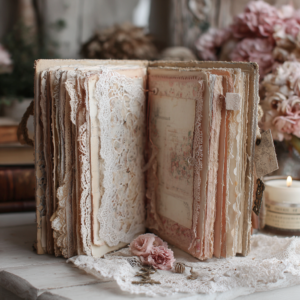 Cardstock – Thick paper used for structure and durability.
Cluster – A layered grouping of decorative elements.
Coffee Dyeing – Staining paper with coffee for an antique effect.
Collage – Layering different materials to create a design.
Corner Tuck – A folded corner that holds small inserts.
D–F: Texture & Detail Techniques
Deckle Edge – A rough, torn edge often seen in handmade paper.
Decoupage – Gluing paper onto surfaces and sealing it.
Die Cut – Shapes cut using a die-cutting machine.
Distress Ink – Ink used to create aged or weathered effects.
Embellishment – Decorative additions like lace, buttons, or tags.
Embossing – Creating raised textures using heat or pressure.
Ephemera – Vintage-style paper items like tickets, labels, and receipts.
Fabric Flip – A fabric piece attached to a page that flips open.
Focal Point – The main element that draws attention on a page.
Folio – A folded insert that holds multiple journaling elements.
G–L: Structure & Layers
Gel Plate Printing – A technique using a gel plate to create prints.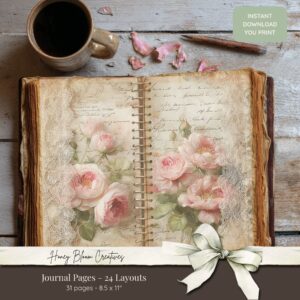
Glue Book – A relaxed journal for gluing scraps creatively.
Grunge Style – A distressed, worn aesthetic.
Gusset – An expandable fold that allows pockets to hold more items.
Hidden Journaling – Writing tucked behind flaps or inside pockets.
Hinge – A folded piece that allows movement between elements.
Insert – A removable journaling piece like a tag or booklet.
Interactive Element – Features like flips, folds, and pull-outs.
Layering – Building depth by stacking materials.
Ledger Paper – Vintage accounting paper often used decoratively.
Library Pocket – A pocket inspired by old library card holders.
M–R: Design & Composition
Matting – Framing an image with layered paper behind it.
Mixed Media – Combining paint, paper, fabric, and more.
Neutral Palette – Soft tones like beige, cream, and dusty rose.
Overlay – A transparent or semi-transparent layer.
Page Signature – A group of folded pages sewn into the journal.
Paper Clip Charm – Decorative elements attached to clips.
Pocket – A space to hold journaling cards or tags.
Printable – Digital files designed to print at home.
Ripped Edge – Torn edges for texture and visual interest.
Rub-On Transfers – Designs applied by rubbing onto a surface.
S–Z: Finishing Touches
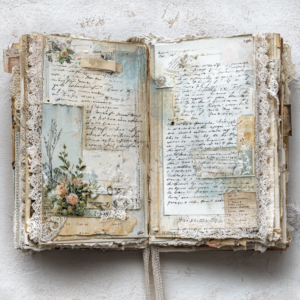 Shabby Chic – A soft, vintage-inspired style with worn elegance.
Signature – A section of folded pages bound into the journal.
Spine – The edge where the journal is bound.
Stamping – Using stamps and ink for decoration.
Stitching – Sewing paper or fabric elements together.
Tag – A decorative journaling piece often tucked into pockets.
Tea Dyeing – Staining paper with tea for an aged look.
Texture Paste – A medium used to create raised designs.
Tuck Spot – A small space to tuck items behind.
Upcycling – Reusing old materials creatively.
Vellum – Translucent paper used for layering.
Vintage Style – Inspired by past eras and aged aesthetics.
Washi Tape – Decorative adhesive tape.
Wax Seal – A melted wax embellishment for a vintage touch.
X-Acto Knife – A precision cutting tool.
Yupo Paper – Synthetic paper used with alcohol inks.
Zine – A small handmade booklet.
Common Junk Journal Techniques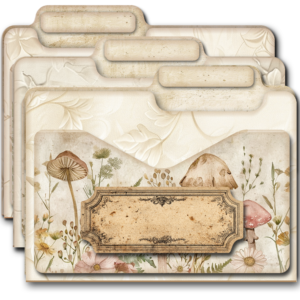
Paper Aging Techniques
- Tea staining
- Coffee dyeing
- Distress inking
- Baking paper for texture
- Sun bleaching
Construction Techniques
- Folding (accordion, gatefold, tri-fold)
- Binding (pamphlet stitch, coptic stitch, ring binding)
- Gluing and layering
- Stapling and stitching
Decorative Techniques
- Stamping
- Embossing
- Stenciling
- Collaging
- Fussy cutting
Why Learning Junk Journal Terms Matters
Understanding junk journal terminology helps you:
- Follow tutorials more easily
- Shop for supplies with confidence
- Create more advanced and polished journals
- Connect with the junk journaling community
It also allows you to better describe and market your own creations—especially if you sell on platforms like Etsy or promote your work on social media.
Conclusion
Junk journaling is more than just a craft—it’s a creative language filled with texture, history, and imagination. By learning these essential junk journal terms and techniques, you’ll not only improve your skills but also feel more inspired and confident in your creative process.
Bookmark this glossary, come back to it often, and don’t be afraid to experiment. The beauty of junk journaling is that there are no rules—only possibilities.


Like to sign up for your newsletter
Hi Sharon,
You can sign up here:
https://honeybloomcreatives.com/
Thank you!